


Notice:
Values are in US Dollars for direct import by the end consumer and are subject to import duties and customs duties.
(the amount can be paid in installments or financed - Find out here how to finance)
Unique and complete solutions for wireless multichannel brain stimulation and monitoring
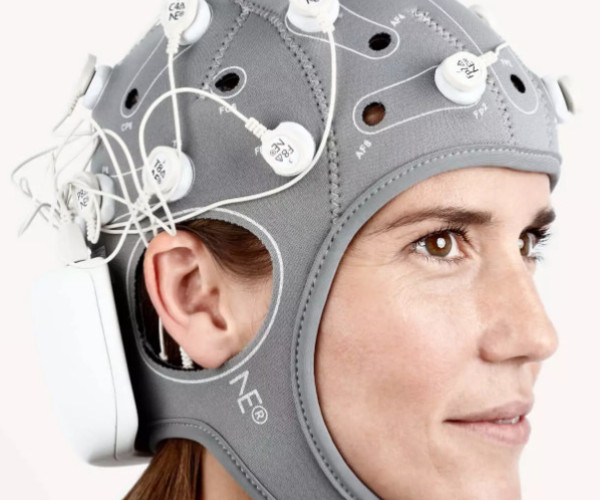
The Starstim® tES-EEG Systems, developed by Neuroelectrics, are professional wireless systems designed to combine transcranial electrical stimulation (tES) and EEG monitoring within an integrated platform for neuroscience, neuromodulation, and brain research.
Available in different configurations, including Starstim 8, Starstim 20, and Starstim 32, the platform enables researchers to develop advanced multichannel stimulation protocols, monitor brain electrical activity, and create experimental applications involving personalized stimulation, simultaneous EEG, and closed-loop neuromodulation.
Brain Stimulation and EEG in One Platform
One of the key advantages of the Starstim family is the integration of transcranial electrical stimulation and EEG acquisition within the same platform.
Compatible tES-EEG systems allow EEG activity to be recorded before, during, and after stimulation, enabling researchers to build comprehensive experimental protocols without requiring completely separate stimulation and EEG acquisition platforms.
This integration makes Starstim particularly suitable for research investigating both the delivery of electrical stimulation and the associated neurophysiological responses.
8, 20, and 32-Channel Systems
The Starstim family includes 8, 20, and 32-channel configurations, allowing researchers to select the architecture that best matches the complexity and requirements of their experimental protocols.
Starstim 8 provides a compact solution for targeted multichannel stimulation and EEG monitoring, while Starstim 20 expands the available channel configuration. Starstim 32 provides a high-density platform for advanced stimulation and EEG research.
Transcranial Electrical Stimulation – tES
Starstim supports Transcranial Electrical Stimulation (tES), providing a flexible platform for different forms of non-invasive electrical brain stimulation.
Depending on the selected configuration and experimental protocol, the platform supports modalities including:
- tDCS – Transcranial Direct Current Stimulation;
- tACS – Transcranial Alternating Current Stimulation;
- tRNS – Transcranial Random Noise Stimulation;
- High-Definition stimulation configurations;
- Multifocal stimulation;
- Customized stimulation waveforms.
This flexibility allows stimulation parameters and electrode montages to be adapted to different neuroscience research objectives.
tDCS – Transcranial Direct Current Stimulation
tDCS uses direct electrical current in non-invasive transcranial stimulation protocols.
With Starstim, researchers can configure different electrode montages and stimulation parameters, including conventional bipolar configurations and more advanced multichannel approaches.
The platform can therefore support studies investigating different current distributions and stimulation targets.
HD-tDCS and 4x1 Configurations
In addition to conventional stimulation montages, Starstim supports High-Definition tDCS (HD-tDCS) configurations, including 4x1 arrangements.
These configurations use multiple electrodes to create more focused stimulation patterns compared with traditional bipolar montages.
The multichannel architecture of Starstim is particularly valuable for research requiring greater control over the spatial distribution of electrical stimulation.
tACS – Transcranial Alternating Current Stimulation
Starstim also supports tACS (Transcranial Alternating Current Stimulation) protocols.
Alternating-current stimulation can be configured with different frequencies, parameters, and electrode montages, including experimental in-phase and anti-phase configurations.
This enables researchers to investigate relationships between oscillatory stimulation and different patterns of brain activity.
tRNS – Transcranial Random Noise Stimulation
Another supported modality is tRNS (Transcranial Random Noise Stimulation).
The ability to work with multiple stimulation modalities within the same platform enables researchers to develop tDCS, tACS, tRNS, and other experimental protocols without requiring independent systems for each stimulation approach.
Custom Stimulation Waveforms
Beyond conventional tES modalities, Starstim supports customized stimulation waveforms for advanced research applications.
This capability provides additional flexibility for researchers developing specialized protocols beyond standard tDCS, tACS, or tRNS configurations.
Depending on the system and research configuration, the platform can also support advanced stimulation paradigms such as temporal interference.
Multifocal Brain Stimulation
The multichannel architecture enables multifocal stimulation, where several electrodes can be used to distribute electrical current according to the requirements of the experimental montage.
Instead of being limited to a conventional two-electrode configuration, researchers can investigate more complex stimulation patterns targeting specific brain regions or networks.
This capability is one of the key advantages of Starstim for advanced neuromodulation research.
Simultaneous EEG Monitoring
Compatible Starstim tES-EEG systems combine brain stimulation with simultaneous EEG monitoring.
This enables researchers to investigate electrical brain activity during stimulation protocols and explore relationships between tES parameters and EEG responses.
Combining both modalities within one platform also simplifies experimental configurations that would otherwise require separate stimulation and EEG acquisition systems.
EEG Before, During, and After Stimulation
Starstim enables researchers to structure experimental protocols with multiple acquisition and stimulation phases.
Protocols can include:
- EEG before stimulation;
- EEG during stimulation;
- EEG after stimulation;
- Multiple tES and EEG stages;
- Customized stimulation and monitoring sequences.
This flexibility allows complex experimental workflows to be structured within an integrated platform.
EEG-tES Closed-Loop Research
One of the most advanced applications of Starstim is EEG-tES closed-loop neuromodulation.
In closed-loop research, information derived from brain activity can be incorporated into systems that control or adapt elements of the experimental protocol.
The integration of EEG and stimulation within the same architecture makes Starstim particularly suitable for research into adaptive and closed-loop neuromodulation.
Electric Field Visualization
The Starstim ecosystem includes tools that help researchers visualize the estimated distribution of electrical stimulation within the brain.
These tools provide representations of the cortical electric field, supporting the planning and evaluation of stimulation montages.
Electric-field visualization can help researchers understand the relationship between electrode positioning, stimulation parameters, and the estimated distribution of electrical current.
Model-Based Stimulation Optimization
Neuroelectrics also provides resources for model-based optimization and personalization of stimulation montages.
Computational modeling can be used to design configurations intended to optimize electric-field distribution according to specific experimental targets.
This approach expands the possibilities for personalized and targeted neuromodulation research.
NIC2 Software
Starstim systems integrate with NIC2, Neuroelectrics' software environment for configuring and managing stimulation and EEG protocols.
The platform enables researchers to create and execute tES protocols, manage experimental sessions, and monitor relevant information during stimulation.
Compatible configurations also provide tools related to EEG monitoring and visualization of estimated electric-field distributions.
Wireless and Portable Design
Starstim is designed as a wireless, lightweight, and portable platform, providing increased flexibility during experimental sessions.
The wireless architecture reduces the amount of conventional cabling required between the participant and acquisition computer, supporting experimental protocols where mobility and ease of setup are important.
Rechargeable battery operation further supports portable research configurations.
Up to 5 Hours of Battery Operation
According to Neuroelectrics, compatible Starstim systems can provide rechargeable battery operation of up to approximately 5 hours, depending on configuration and use.
This enables researchers to conduct extended experimental sessions while maintaining the advantages of a portable wireless architecture.
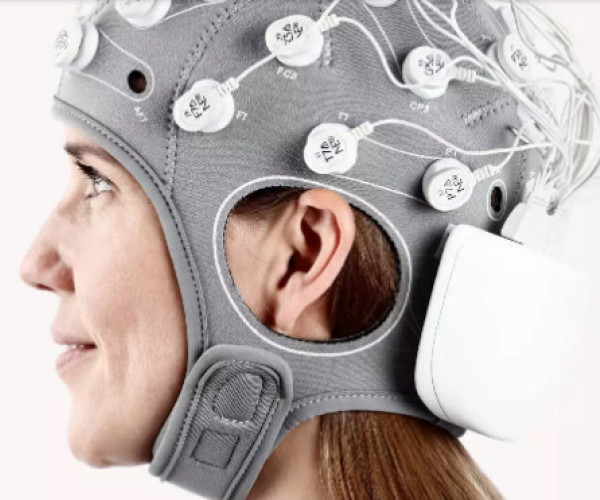
Headcaps for Electrode Positioning
The Starstim ecosystem uses specialized headcaps designed to facilitate structured electrode positioning.
For example, compatible Neuroelectrics headcaps provide multiple predefined positions for tES and EEG electrodes, using established international electrode-placement conventions.
This architecture simplifies the preparation of multichannel stimulation and EEG configurations while helping researchers reproduce electrode positions across sessions.
Hybrid tES-EEG Electrodes
Neuroelectrics provides Ag/AgCl hybrid electrodes designed for applications involving both tES and EEG.
This architecture facilitates experimental configurations where stimulation and electrophysiological monitoring need to be incorporated into the same setup.
Different electrode options are also available for specific stimulation requirements, including sponge-based configurations.
Fast Experimental Setup
Despite its advanced multichannel capabilities, Starstim is designed to simplify experimental preparation.
The combination of dedicated headcaps, structured electrode positions, integrated software, and wireless architecture helps reduce the complexity traditionally associated with multichannel stimulation and EEG setups.
This can be particularly valuable in research environments where protocols are performed repeatedly across multiple participants.
Double-Blind Research
The Starstim ecosystem also supports experimental workflows for double-blind studies.
Software-based protocol management can assist researchers in creating and managing active and sham stimulation conditions, depending on the selected experimental configuration.
This capability is particularly relevant for controlled neuromodulation research requiring comparisons between stimulation and control conditions.
Neuromodulation Research
Starstim is primarily designed for advanced research in non-invasive brain stimulation and neuromodulation.
The platform can be incorporated into research investigating different neurological, cognitive, behavioral, and rehabilitation-related areas.
Its flexibility enables researchers to explore how different stimulation parameters, electrode configurations, and stimulation modalities influence brain activity and experimental outcomes.
Multimodal Research
The Starstim architecture can also be incorporated into multimodal research protocols, combining tES and EEG with additional neuroimaging or physiological technologies.
Depending on the experimental configuration, researchers can develop studies combining modalities such as tES, EEG, and fNIRS, expanding the possibilities for investigating brain responses to stimulation.
Key Features
- Professional platform for Transcranial Electrical Stimulation (tES);
- Simultaneous EEG monitoring in compatible tES-EEG models;
- 8, 20, and 32-channel system configurations;
- Wireless and portable architecture;
- Rechargeable battery operation;
- Up to approximately 5 hours of battery life in compatible configurations;
- Support for tDCS;
- Support for tACS;
- Support for tRNS;
- Custom stimulation waveforms;
- Conventional bipolar montages;
- HD-tDCS / 4x1 configurations;
- Multifocal stimulation;
- In-phase and anti-phase tACS research;
- Multistage tES-EEG protocols;
- EEG before, during, and after stimulation;
- EEG-tES closed-loop research capabilities;
- Electric-field visualization;
- Model-based stimulation optimization;
- Integration with NIC2 software;
- Hybrid Ag/AgCl tES-EEG electrodes;
- Multiple electrode and headcap options;
- Support for controlled and double-blind studies;
- Suitable for advanced multimodal research.
Applications
The Starstim® tES-EEG Systems can be incorporated into research involving:
- Neuromodulation;
- Neuroscience;
- Neurophysiology;
- Transcranial Electrical Stimulation (tES);
- tDCS;
- HD-tDCS;
- tACS;
- tRNS;
- Multifocal stimulation;
- EEG;
- EEG-tES research;
- Closed-loop neuromodulation;
- Neurofeedback research;
- Cognitive neuroscience;
- Rehabilitation research;
- Brain network research;
- Multimodal neuroscience experiments.
Its multichannel architecture enables researchers to develop everything from relatively straightforward stimulation protocols to complex experiments involving multiple brain regions, simultaneous EEG acquisition, personalized electric-field modeling, and adaptive stimulation.
Integrated Platform for Advanced tES and EEG Research
The Starstim® tES-EEG Systems provide an integrated platform for researchers who need to combine multichannel brain stimulation, EEG monitoring, wireless operation, and advanced experimental planning tools.
With 8, 20, and 32-channel configurations, support for tDCS, tACS, tRNS, custom waveforms, multifocal stimulation, simultaneous EEG, electric-field visualization, and closed-loop research, the Starstim family provides a highly flexible architecture for advanced neuroscience and neuromodulation studies.
Starstim® tES-EEG Systems — multichannel brain stimulation and EEG monitoring in an integrated wireless platform for advanced neuroscience and neuromodulation research.
Contact our team for more information about Starstim 8, Starstim 20, Starstim 32, Starstim tES, headcaps, electrodes, NIC2 software, stimulation configurations, accessories, and commercial conditions.