
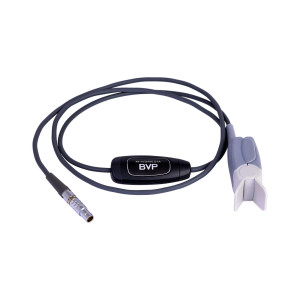
The Blood Volume Pulse (BVP) Sensor | Finger, developed by Mind Media for the NeXus ecosystem, is a professional, non-invasive sensor designed to acquire information related to relative changes in peripheral blood flow associated with cardiovascular activity.
Using optical Photoplethysmography (PPG..
$1,500.00
Ex Tax:$1,500.00
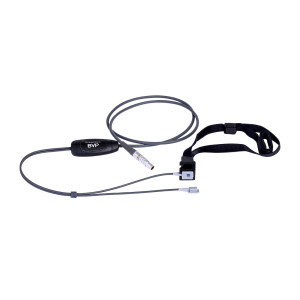
The Blood Volume Pulse (BVP) Sensor | Head, developed by Mind Media for the NeXus ecosystem, is a professional, non-invasive sensor designed to monitor relative changes in blood flow at the temporal artery, located on the side of the head.Using optical Photoplethysmography (PPG) technology with near..
$1,500.00
Ex Tax:$1,500.00
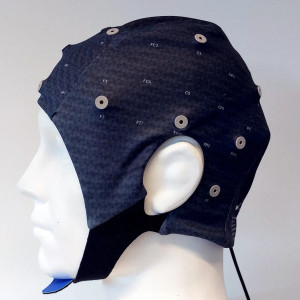
The EEG Caps, developed by Mind Media for the NeXus ecosystem, are professional caps designed to make electroencephalography (EEG) signal acquisition more organized, consistent, comfortable, and efficient.
Featuring predefined electrode positions, flexible materials, and configurations for multicha..
$1,500.00
Ex Tax:$1,500.00
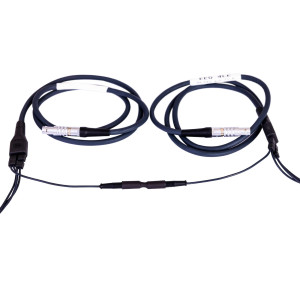
The EEG Linked Ear Sensor, developed by Mind Media for the NeXus ecosystem, is a professional solution for electroencephalography (EEG) acquisition using a linked-ear reference configuration.Available in 2- or 4-channel EEG versions, the sensor allows simultaneous recording of brain electrical activ..
$1,500.00
Ex Tax:$1,500.00
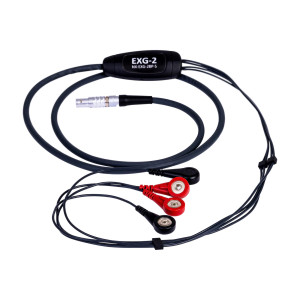
The NeXus ExG Sensor, developed by Mind Media, is a professional biopotential acquisition sensor designed to work with NeXus systems for biofeedback, neurofeedback, psychophysiology, and physiological signal acquisition applications.
Featuring a dual-channel bipolar configuration, the ExG Sensor ca..
$1,500.00
Ex Tax:$1,500.00
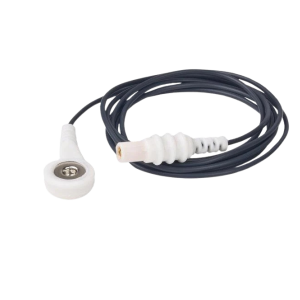
The Ground Cable, developed by Mind Media for the NeXus ecosystem, is an essential accessory for the acquisition of electrophysiological signals such as EEG, EMG, ECG, EOG, and Slow Cortical Potentials (SCP).
During the recording of these biopotentials, the acquisition system requires a ground conn..
$1,500.00
Ex Tax:$1,500.00
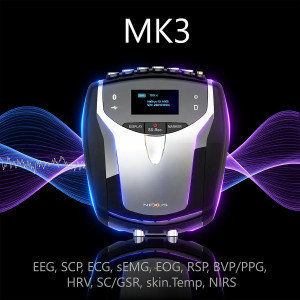
The NeXus | 10 MK3, developed by Mind Media, is a next-generation multimodal platform for physiological signal acquisition and recording, designed for professional applications in biofeedback, neurofeedback, psychophysiology, research, performance training, and rehabilitation.Built on the establishe..
$1,500.00
Ex Tax:$1,500.00
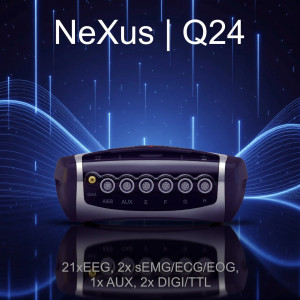
The NeXus | Q24, developed by Mind Media, is a professional, portable, and wireless system for quantitative EEG (qEEG) acquisition, neurofeedback, research, and multimodal physiological signal analysis.Designed for professionals who require expanded EEG capabilities without compromising mobility, th..
$1,500.00
Ex Tax:$1,500.00

The NeXus | Q32, developed by Mind Media, is a high-performance professional platform for qEEG, neurofeedback, biofeedback, and multimodal psychophysiological signal acquisition, designed for applications requiring a high channel count, precision, and flexibility.Positioned by the manufacturer as it..
$1,500.00
Ex Tax:$1,500.00
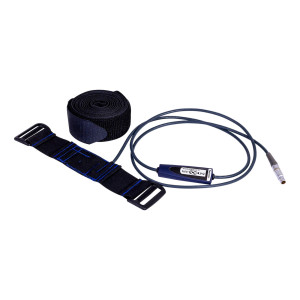
The Respiration (RSP) Sensor, developed by Mind Media for the NeXus ecosystem, is a professional sensor designed to acquire information related to breathing patterns, enabling the monitoring of respiratory rate and relative changes in the depth of abdominal or thoracic breathing.Using an adjustable ..
$1,500.00
Ex Tax:$1,500.00

Combining inertial reflex sensors, algorithms and biomechanics,
GaitUP GO solutions clinically validated motion analytics covering all
major gait and balance tests. Giving wearables the precision of motion
labs, it delivers the need for everyday clinical use through a simple
app.
Currentl..
$1,500.00
Ex Tax:$1,500.00

The Skin Conductance (GSR) & Temperature (TMP) Combi Sensor for Q32, developed by Mind Media, is a professional physiological sensor specifically designed for the NeXus | Q32, combining simultaneous acquisition of Skin Conductance (GSR/EDA) and Peripheral Temperature (TMP) in a single solution.B..
$1,500.00
Ex Tax:$1,500.00
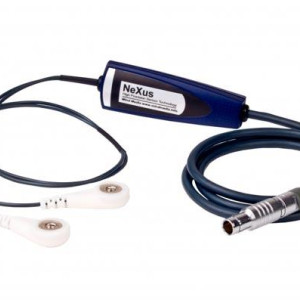
The Skin Conductance (GSR) Sensor, developed by Mind Media for the NeXus ecosystem, is a professional sensor designed to measure the electrical conductance of the skin, a physiological parameter also known as Galvanic Skin Response (GSR) or Electrodermal Activity (EDA).The sensor measures small chan..
$1,500.00
Ex Tax:$1,500.00
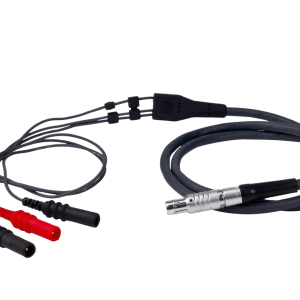
The Slow Cortical Potentials Sensor | SCP, developed by Mind Media for the NeXus ecosystem, is a professional 2-channel sensor specifically designed for the acquisition of Slow Cortical Potentials (SCP), electrical brain signals found in the lowest-frequency range of the EEG spectrum, below 1 Hz.Slo..
$1,500.00
Ex Tax:$1,500.00
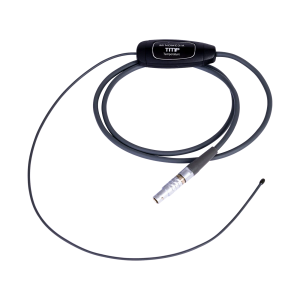
The Temperature (TMP) Sensor, developed by Mind Media for the NeXus ecosystem, is a professional sensor designed to monitor small changes in peripheral extremity temperature, providing a precise tool for biofeedback, psychophysiology, self-regulation training, human performance, and research applica..
$1,500.00
Ex Tax:$1,500.00
Showing 1 to 15 of 15 (1 Pages)